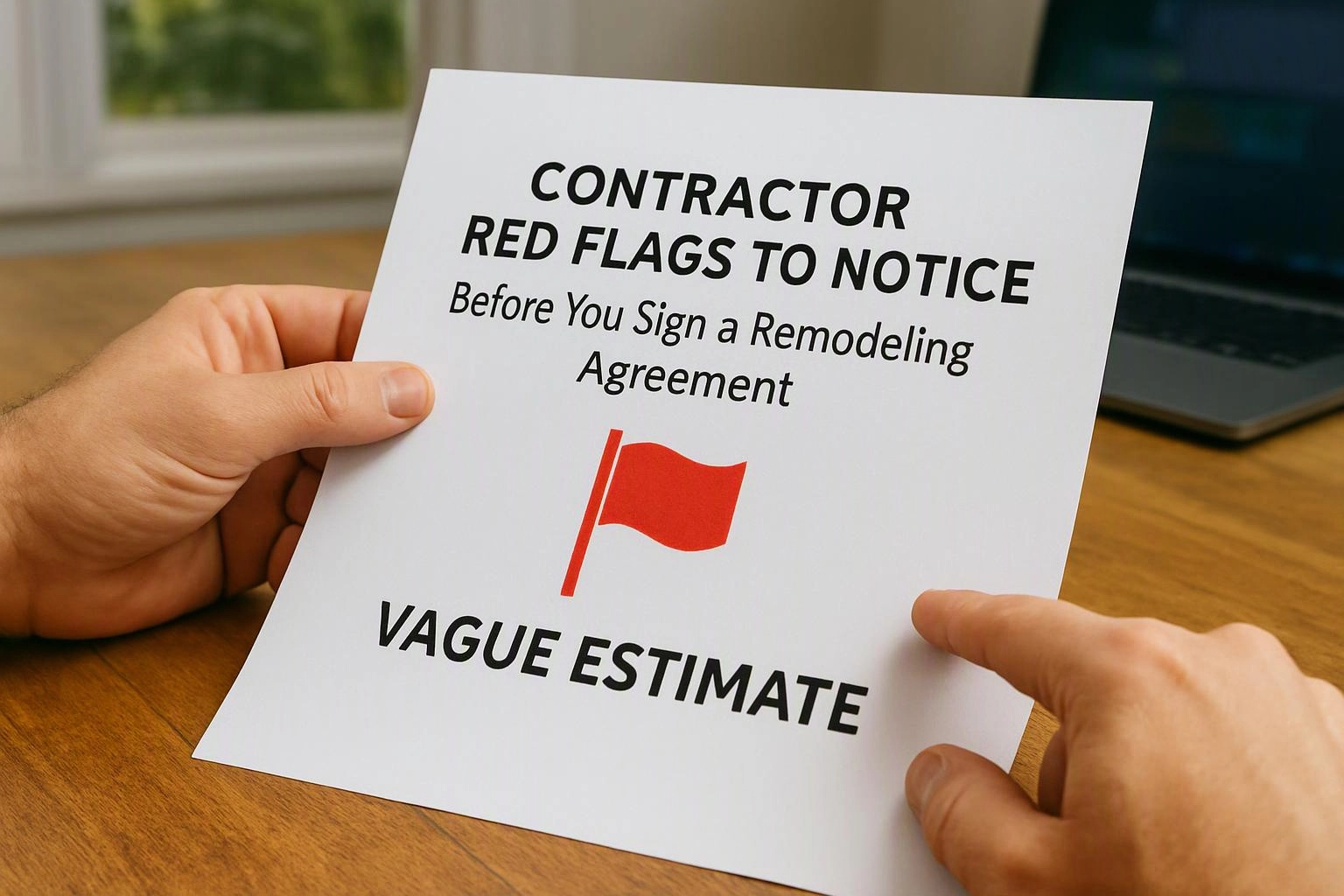
Contractor Red Flags to Notice Before You Sign a Remodeling Agreement
A vague remodeling estimate hides the work, materials, costs, and change rules you need to review. HomeRemodelSammamish.com recommends checking every promise against a clear written scope before you sign an agreement.
Request an EstimateWhy a Vague Remodeling Estimate Is a Warning Sign
A vague remodeling estimate makes the promised work hard to verify and can create disputes during construction.
A remodeling estimate should show what the remodeling contractor will do, supply, and manage. It should also explain what the homeowner must decide or provide. Without those details, the remodeling agreement may leave room for different interpretations.
We compare the estimate with the plans, product choices, project schedule, and site expectations. That review helps us identify unclear scope, missing exclusions, and promises that need to become contract documents.
Use This Table to Check a Remodeling Contractor’s Estimate
Each estimate section should answer a practical question about the work. Use this table to spot gaps before signing a project agreement.
A clear estimate connects the scope, payment rules, materials, and responsibilities. We use those connections to support better project coordination.
| Estimate area | What to check | Warning sign |
|---|---|---|
| Scope of work | Rooms, tasks, finishes, and installation details | Broad wording with no project drawings or room details |
| Labor and materials | Installation work and product specifications | One combined amount with no material description |
| Allowances | Selection duties and covered product costs | Important choices are left open without clear limits |
| Change orders | Written approval, added work, and revised estimates | Verbal changes can move forward without documentation |
| Payment schedule | Deposit, progress payments, and completion payment | Payments do not match completed milestones |
| Permits and inspections | Permit responsibility, inspection responsibility, and code compliance | No clear party handles regulated work requirements |
| Project responsibilities | Site access, dust control, and debris removal | Homeowner duties and site protection are not explained |
Red Flag: The Estimate Uses a Broad Scope of Work
A broad scope of work describes the project without showing each planned task. This wording often develops when the estimate is prepared before the plans, selections, and site conditions are fully reviewed.
Broad language can lead to unwritten work, added charges, or disagreement over the finished result. We fix this issue by tying the scope to project drawings, room-by-room details, finishes, exclusions, and installation duties.
Red Flag: Labor and Materials Are Combined Without Detail
Combined labor and materials make it difficult to understand what the estimate covers. The problem often starts when product selections are still open or the estimate uses a single allowance for several tasks.
Missing details can allow material substitutions or unclear installation work. We separate the labor description from product specifications, installation requirements, and any approved substitution process.
Red Flag: Allowances Hide Important Product Choices
An allowance is a planning amount for a fixture or finish material that has not been selected. Allowances become risky when the selection responsibility and covered material cost are not clear.
Unclear allowances can shift decisions and cost responsibility during construction. We identify each allowance, explain who makes the selection, and document how a different product changes the estimate.
Red Flag: The Payment Schedule Does Not Match Project Milestones
A payment schedule should connect each payment to a clear project milestone. A deposit, progress payment, and completion payment need defined triggers that both parties can check.
A schedule that does not match completed work can create pressure and confusion. We align payment terms with documented progress and explain what completion means for each stage.
Red Flag: Change Orders Have No Written Approval Process
A change order should record a scope change, its effect on the estimate, and written approval before added work begins. Verbal requests often cause disputes because people remember the conversation differently.
Unclear change rules can affect materials, labor, and the project schedule. We use a written approval process that identifies the revised work and confirms homeowner approval.
Red Flag: The Estimate Leaves Permits and Inspections Unclear
Permit and inspection responsibility should be stated before regulated work begins. The estimate should also identify the code compliance requirements that apply to the planned work.
Unclear responsibility can delay inspections or leave required documents incomplete. We review the work category, coordinate the required steps, and advise licensed professionals for regulated electrical, plumbing, gas, structural, or similar work.
Red Flag: The Agreement Does Not Explain Delays or Site Duties
A remodeling agreement should explain how schedule changes, site access, dust control, and debris removal will be handled. These duties often remain vague when the estimate focuses only on the finished product.
Unclear site duties can disrupt daily life and create avoidable construction delays. We document access needs, site protection, cleanup duties, and the process for updating the project schedule.
Red Flag: Verbal Promises Are Missing From the Agreement
A verbal promise should be added to the written agreement before signing. Spoken expectations can include product details, finish quality, cleanup, schedule needs, or work that someone said was included.
Missing promises are difficult to enforce and can cause disputes later. We place confirmed decisions in the contract documents so the project team and homeowner use the same reference.
What Should a Remodeling Estimate Include?
A remodeling estimate should identify the work, materials, exclusions, payment rules, change process, permits, and project responsibilities.
The estimate should describe labor and materials in plain terms. It should also list allowances, product specifications, project exclusions, and the decisions the homeowner must make.
A complete document connects the payment schedule to project milestones. It also explains permit responsibility, inspection responsibility, code compliance, site protection, debris removal, and the project schedule.
How We Turn a Clear Scope Into a Remodeling Plan
Construction Project Management turns an approved scope into an organized remodeling plan. We review the estimate, drawings, selections, responsibilities, and site conditions before work begins.
Our team records homeowner decisions and identifies open items that could affect labor, materials, or schedule changes. We then coordinate the project documents, milestone discussions, and change order process.
You can learn more about our Construction Project Management approach. Clear planning gives every project participant one dependable reference.
Ask These Questions Before You Sign
These questions help you test whether the remodeling agreement explains the project clearly. Ask for written answers before approving the work.
When Homeowners Should Call HomeRemodelSammamish.com
Homeowners should call us when an estimate leaves key project decisions open or unclear. Our team can review the documents and organize the next planning step.
We provide clear planning support for homeowners who want the agreement and construction plan to work together. Request a consultation through our contact page.
Questions About Remodeling Agreement Red Flags
Can a remodeling contractor change the scope without a written change order?
No, added work should receive written approval through a change order before construction begins. The document should describe the scope change and show its effect on the estimate and project schedule.
What should I do if a contractor's verbal promise is missing from the agreement?
Ask for the verbal promise to be added to the written agreement before signing. The updated contract documents should explain the expected work, materials, finish, or responsibility in clear terms.
Who should clarify permit and inspection responsibilities before remodeling work begins?
Homeowners and the remodeling contractor should clarify permit and inspection responsibility in the written agreement. We identify the regulated work, coordinate the required project steps, and advise licensed professionals when specialized work is involved.