Bathroom Warning Signs You Should Investigate Before More Damage Spreads
Soft bathroom floors, recurring grout cracks, leaks, stains, and musty smells can signal hidden water damage. At HomeRemodelSammamish.com, we check affected bathroom areas, trace the moisture source, and repair damaged materials before the problem spreads.
Request an EstimateWhich Bathroom Warning Signs Need Investigation First?
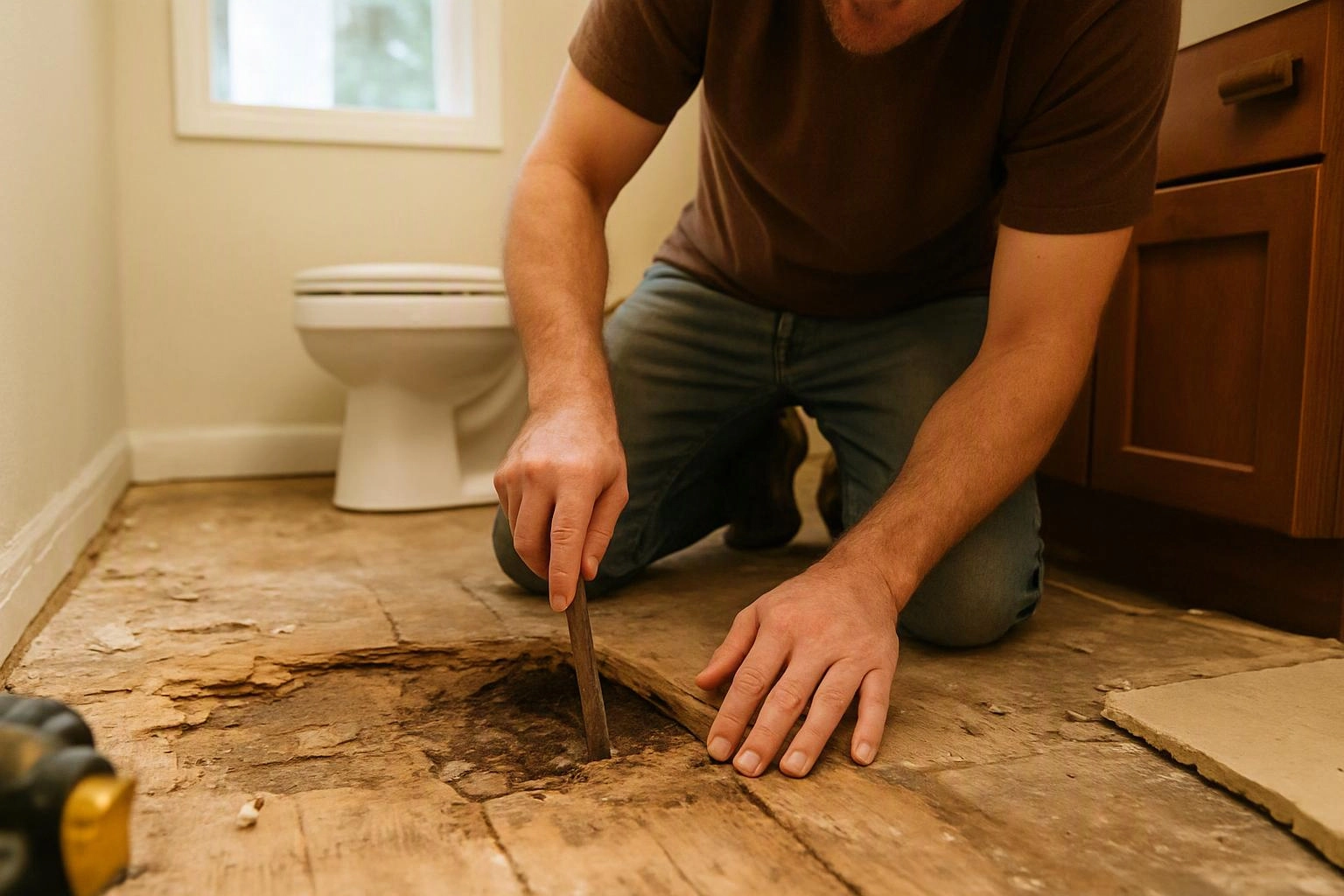
A soft floor, active leak, spreading stain, or musty odor needs investigation before moisture damages more materials. These signs can point to bathroom water damage behind finished surfaces.
A soft bathroom floor may indicate a damaged subfloor or movement in the floor system. A leaking shower can wet wall cavities, trim, and nearby flooring. Cracked grout may allow water into the tile assembly, while a musty odor can signal damp building materials.
Bathroom Warning Signs at a Glance
Visible bathroom warning signs often connect to damage below the surface. The table shows what each sign may mean and what our team checks next.
| Warning sign | Possible concern | What we investigate |
|---|---|---|
| Soft floor | Water intrusion or damaged subfloor | Floor layers and floor joists |
| Cracked grout | Tile movement or moisture below | Tile installation and shower waterproofing |
| Loose tile | Weak tile adhesive or water penetration | Tile bond and the surface behind it |
| Water stain | A plumbing or shower leak | The moisture source above or nearby |
| Peeling paint | Moisture damage in the wall | Drywall, joint compound, and ventilation |
| Musty smell | Damp materials or mold growth conditions | Hidden moisture and bathroom ventilation |
| Leaking fixture | A failing plumbing connection | Fixture, supply, and drain connections |
| Swollen drywall | Repeated moisture exposure | Wall materials and the source of moisture |
One sign may have more than one cause. We trace the moisture source before choosing repairs.
Ignoring a Spongy or Soft Bathroom Floor
A soft bathroom floor can mean water has weakened the subfloor below the finish. Water intrusion may also affect floor joists, fasteners, and nearby walls.
Floor movement can come from damaged materials or an unstable tile assembly. Covering the area may hide the problem while wet building materials continue to weaken. We inspect the floor system, remove damaged layers when needed, and replace materials that cannot provide a solid base.
Covering a Water Stain Without Finding Its Source
A ceiling stain or wall stain can mean a plumbing leak or shower leak is still active. Paint covers the mark, but it doesn't stop moisture inside the wall or ceiling.
We trace the moisture source before repairing the visible surface. The repair may include controlled demolition, wet material removal, drywall repair, and correction of the plumbing connection or shower assembly.
Treating Recurring Cracked Grout as a Cosmetic Problem
Recurring cracked grout can show tile movement, poor tile installation, or moisture beneath the surface. Grout repairs won't last when the tile assembly keeps shifting.
We check the substrate, grout joints, and shower waterproofing before selecting a fix. The repair may require tile removal, correction of the base, replacement materials, and new grout after the assembly is stable.
Leaving Loose or Hollow-Sounding Bathroom Tile in Place
Loose tile or hollow tile can indicate weak tile adhesive or water penetration behind the surface. A loose tile on a shower wall deserves attention because water may reach the backing material.
We check the tile bond and the surface below it. If the backing is sound, we can plan a targeted tile repair. If water has damaged the assembly, the repair scope may include demolition, drying, waterproofing work, and new tile installation.
Painting Over Peeling or Swollen Bathroom Drywall
Peeling paint and swollen drywall show that a bathroom wall has absorbed moisture. Joint compound can soften, separate, or lose its bond when moisture damage continues.
We identify the moisture source before starting drywall repair. Our crew removes unsound material, checks the wall cavity, restores the surface, and prepares it for suitable bathroom paint.
Ignoring a Musty Bathroom Smell
A musty odor can mean hidden water damage or damp building materials. The smell may also point to mold growth conditions caused by ongoing moisture and poor bathroom ventilation.
We look for moisture behind cabinets, walls, flooring, and tile. We also review ventilation because trapped humidity can keep materials damp. The fix depends on the moisture source, affected materials, and needed cleaning or replacement.
Repeatedly Caulking Around a Shower or Tub
Recurring caulk failure around a shower or tub can signal movement, poor surface preparation, or waterproofing failure. Caulk around a shower door, tub surround, or plumbing fixture cannot correct a damaged assembly.
We inspect the joint, surrounding tile, and moisture path. Our repair may include removing failed shower caulk, correcting the surface, checking the waterproofing, and replacing affected materials.
Delaying Repairs After a Plumbing Leak
A plumbing leak can leave wet materials inside a bathroom cabinet, wall, or floor. Common sources include a toilet supply line, sink drain, valve, or other plumbing connection.
We assess the leak area and separate the plumbing repair from the material repair. Our crew checks for damaged drywall, flooring, cabinet parts, and subfloor sections before planning replacement.
What Should You Check Before More Bathroom Damage Spreads?
Check the water source, floor system, wall materials, tile assembly, and bathroom ventilation before planning repairs.
Plumbing, structural, and waterproofing work can involve code and inspection requirements. We handle the repair assessment and recommend licensed trade work when the scope requires it.
When Should You Call HomeRemodelSammamish.com?
Call us when damage affects hidden materials, keeps returning, or requires plumbing, structural, or tile work.
Simple surface cleaning cannot resolve hidden moisture. Our team connects the visible warning sign to the needed repair scope.
What Changes the Cost of Repairing Bathroom Water Damage?
Bathroom repair cost depends on the moisture source, damaged layers, required demolition, replacement materials, and related plumbing or tile work.
Subfloor replacement usually requires more work when damage reaches the floor system. Drywall repair depends on the area affected and whether the wall cavity needs attention. Tile replacement depends on the tile assembly, waterproofing, adhesive, and matching replacement materials.
Our quote reflects the actual repair scope after we assess the affected area. Contact us for a project review and an exact quote for your bathroom.
How We Investigate and Repair Bathroom Warning Signs
We start with a moisture inspection and damage assessment, then connect the findings to a practical repair plan. Our team looks for the source, the affected layers, and the conditions that could cause the problem to return.
When demolition is needed, we remove damaged materials carefully and protect sound areas. We then complete drywall repair, tile installation, plumbing-related repairs, or broader bathroom remodeling based on the approved scope.
We explain the repair sequence, material choices, and inspection needs before work begins. That process helps prevent cosmetic repairs from hiding a larger moisture problem.
Plan the Right Bathroom Repair
The right bathroom repair begins by matching the visible warning sign to its hidden cause. We can help you decide whether the project needs focused water damage repair, tile work, drywall repair, or a larger remodel.
Our Bathroom remodeler team can assess the affected space and explain the next step. Contact us through our project contact page to request a consultation.
Related Resources
How to Choose a General Contractor for Your Project
Compared ToStandard vs Premium Bathroom remodeler Systems & Materials Compared (2026)
Compared ToLocal Specialist vs National Bathroom remodeler Providers in Sammamish: Cost & Service Compared
Why It MattersPermits and Inspections for Remodeling Projects in Washington