Deck Problems That Deserve More Than a Cosmetic Repair
Deck repair warning signs such as rot, loose railings, sagging, and soft boards can show deeper structural damage. HomeRemodelSammamish.com checks the deck’s framing, connections, boards, stairs, and railings to decide whether targeted repair or rebuilding is safer.
Request an EstimateWhen Deck Damage Needs Structural Attention
A deck needs structural attention when visible damage affects framing, connections, support posts, stairs, or railing stability.
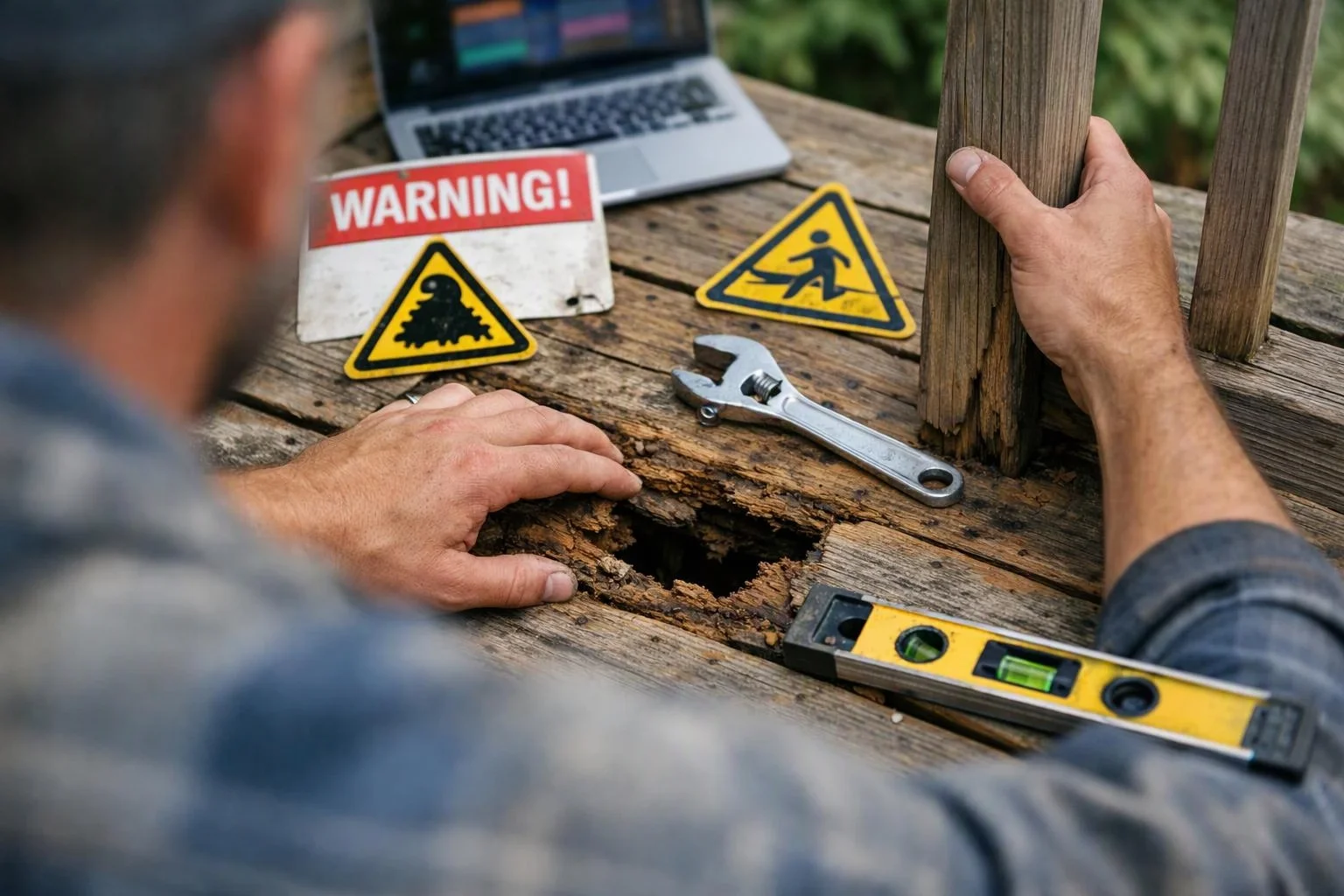
Structural damage often appears through soft wood, cracked boards, loose railings, or a sagging deck. Surface damage may look small, but moisture can travel into joists, beams, and support posts. Our team traces each warning sign before recommending deck repair or deck rebuilding.
Wood rot can weaken the parts that carry the deck. A loose guardrail can point to a failing railing post or post connection. A deck that sags in one area may have movement at a beam, joist, support post, or footing.
Our Deck Repair process focuses on the cause, not only the visible symptom. That approach helps protect deck safety and supports a clear repair-or-rebuild decision.
Seven Deck Repair Mistakes That Hide Bigger Problems
Deck repair mistakes happen when surface damage is treated without checking the structure below it.
Cosmetic work can improve appearance for a short time. It won't correct hidden wood decay, unstable connections, settlement, or water intrusion. Our team checks the full assembly before choosing a repair method.
Covering Rot With Paint or Stain
Paint or stain can hide wood rot without restoring the strength of deck boards or joists.
Moisture damage often starts where water remains against wood. Paint may cover the surface while decay continues below the coating. The cost then grows because more material may need replacement later.
We remove affected coatings and inspect the surrounding boards, joists, and connections. Our fix may include replacing damaged wood, correcting drainage, and protecting exposed areas from further moisture.
Replacing a Soft Board Without Checking Below It
A soft deck board can mean that moisture has also damaged the joist or ledger board beneath it.
Soft wood develops when water enters cracks, joints, or fastener holes. Replacing only the board leaves possible wood decay and water damage in place. That hidden damage can increase the repair scope.
We inspect the joist, ledger board, and nearby deck framing before installing replacement material. We also look for the moisture path that caused the soft spot.
Tightening a Loose Railing Without Checking Its Posts
A loose railing needs a railing post and post connection check before anyone relies on the guardrail.
Loose fasteners may be the visible problem, but the post may also have rot or movement. Tightening hardware into weakened wood doesn't restore reliable support. The cost depends on whether the damage affects the fasteners, post, framing, or connected guardrail.
We check the railing post, fasteners, blocking, and connection points. Our repair replaces weakened parts and secures the guardrail to sound structure.
Hiding a Sagging Deck With New Surface Boards
A sagging deck usually needs a deck framing review before new surface boards are installed.
Sagging can relate to a beam, joist, support post, footing, or settlement. New boards may follow the same uneven shape and place stress on nearby connections. The repair cost changes with the depth and spread of the framing problem.
We trace the slope through the deck framing and inspect beams, joists, posts, and connections. Our crew then explains whether localized structural work can restore the deck or whether deck reconstruction is safer.
Adding Fasteners Without Checking the Ledger Connection
Extra fasteners don't correct a weak ledger board or an unsafe house connection.
The ledger board connects the deck to the building. Poor flashing or failed fasteners can allow water intrusion behind the ledger. That moisture can damage the wall and the deck attachment.
We inspect the ledger, flashing, fasteners, and adjacent framing. Our repair scope addresses the connection and the water path before surface work continues.
Repairing Stairs Without Checking Their Support
Deck stairs need a support and connection review before damaged treads or risers are replaced.
Wobbly stairs may involve stringers, the landing, or the stair connections. New stair treads can improve appearance while leaving movement below. The cost changes with the condition of the stringers, landing, and supporting structure.
We inspect stringers, stair treads, stair risers, landings, and connections. Our crew replaces damaged parts and checks that the stair assembly has stable support.
Replacing Railing Parts Without Checking the Whole Guard System
A deck railing repair must consider the full guard system, not only one broken part.
Balusters, the top rail, railing height, and openings work together to create a safe barrier. Replacing one part may leave weak posts or unsuitable openings. The repair cost depends on how much of the system needs correction.
We review the posts, top rail, balusters, connections, height, and openings. Our team then replaces or rebuilds the affected sections so the guard system works as a whole.
How We Separate Cosmetic Damage From Structural Damage
We separate cosmetic damage from structural damage by tracing visible symptoms to the boards, framing, supports, and connections beneath them.
Surface damage usually stays limited to finishes or replaceable boards. Structural damage affects load-carrying parts, connections, stability, or safe access.
Repair or Rebuild? Use the Damage Pattern to Decide
Targeted repair fits localized damage with sound surrounding structure, while rebuilding fits widespread decay, unstable framing, or repeated failures.
The right choice depends on the pattern of damage, not one isolated defect. Our team checks whether the remaining deck structure can support the repaired section.
| Damage pattern | Likely scope | What we evaluate |
|---|---|---|
| Localized board or trim damage | Targeted deck repair | Sound joists, dry connections, and stable surrounding boards |
| Rot that reaches several connected components | Broader structural repair | Extent of wood decay, moisture source, and support condition |
| Widespread rot or unstable framing | Deck rebuilding or reconstruction | Framing layout, support posts, ledger, stairs, and railing system |
| Repeated failures after earlier repairs | Cause-focused rebuilding review | Underlying drainage, settlement, attachment, or design concerns |
Deck safety is the deciding factor when repair and rebuilding both seem possible. We recommend the smaller scope only when the remaining structure is sound and the repair can last.
What Changes the Cost of Fixing a Damaged Deck?
The cost of fixing a damaged deck changes with the affected materials, hidden damage, access, connections, stairs, railings, and repair scope.
Material replacement may involve deck boards, joists, beams, support posts, stairs, or railings. Hidden moisture damage can expand the work after surface materials are removed.
Access also matters because difficult areas can require more careful removal and handling. Structural framing and deck connections usually require more work than surface damage. A deck reconstruction has a broader scope than a localized repair.
Our quote explains the damaged components, recommended work, replacement materials, and conditions that may change the scope. You can request an exact quote through our contact page.
When to Call HomeRemodelSammamish.com Instead of Doing It Yourself
Call HomeRemodelSammamish.com when deck damage affects stability, elevated access, structural connections, or safe use.
Our team performs the structural inspection and explains the safe repair path. Stop using areas that feel unstable until the damaged structure has been assessed.
What Our Deck Repair Quote Covers
Our deck repair quote explains the damaged components, recommended scope, replacement work, and the conditions that may affect the project.
We connect the visible warning signs to the underlying deck construction. The quote can address deck boards, joists, beams, support posts, the ledger board, stairs, railings, and structural connections as needed.
Our team also explains whether the work fits deck repair, deck rebuilding, or a broader deck reconstruction. Related exterior work may include porch construction when the project involves connected structures.
The quote gives you a clear basis for choosing the repair scope. It also identifies hidden conditions that may become visible during removal.
Free Consultations
Get a Free EstimateQuestions About Serious Deck Damage
Can a deck with wood rot be repaired?
Yes, deck wood rot can be repaired when the affected area is localized and the surrounding structure remains sound. We check how far the decay reaches before choosing board replacement, joist repair, or a broader rebuild.
What should I do about a loose deck railing?
Stop relying on a loose deck railing and have the railing post, fasteners, and guardrail connection checked. We inspect the full guard system because tightening visible hardware may not correct damaged support wood.
Why does a deck sag in one area?
A deck can sag in one area when a beam, joist, support post, footing, or connection has moved or weakened. We trace the slope through the framing and check for settlement before recommending repair or rebuilding.
Can soft deck boards mean the joists are rotten?
Yes, soft deck boards can mean that moisture damage or wood decay has reached the joists below. We inspect the board, joist, ledger board, and nearby framing before replacing the surface.
What deck damage should not wait for cosmetic repairs?
Deck damage involving a sagging frame, loose railing, unstable stairs, widespread rot, or a failing ledger connection should not wait for cosmetic work. We assess those warning signs first because they can affect safe use and structural stability.