Gutter Problems to Investigate When Water Is Reaching the House
Gutter problems warning signs include leaking joints, sagging runs, loose fasteners, blocked outlets, and water stains near the house. HomeRemodelSammamish.com checks the gutter path, roof edge, and drainage points to identify the cause and recommend repair or replacement.
Request an EstimateHow Gutter Problems Send Water Toward the House
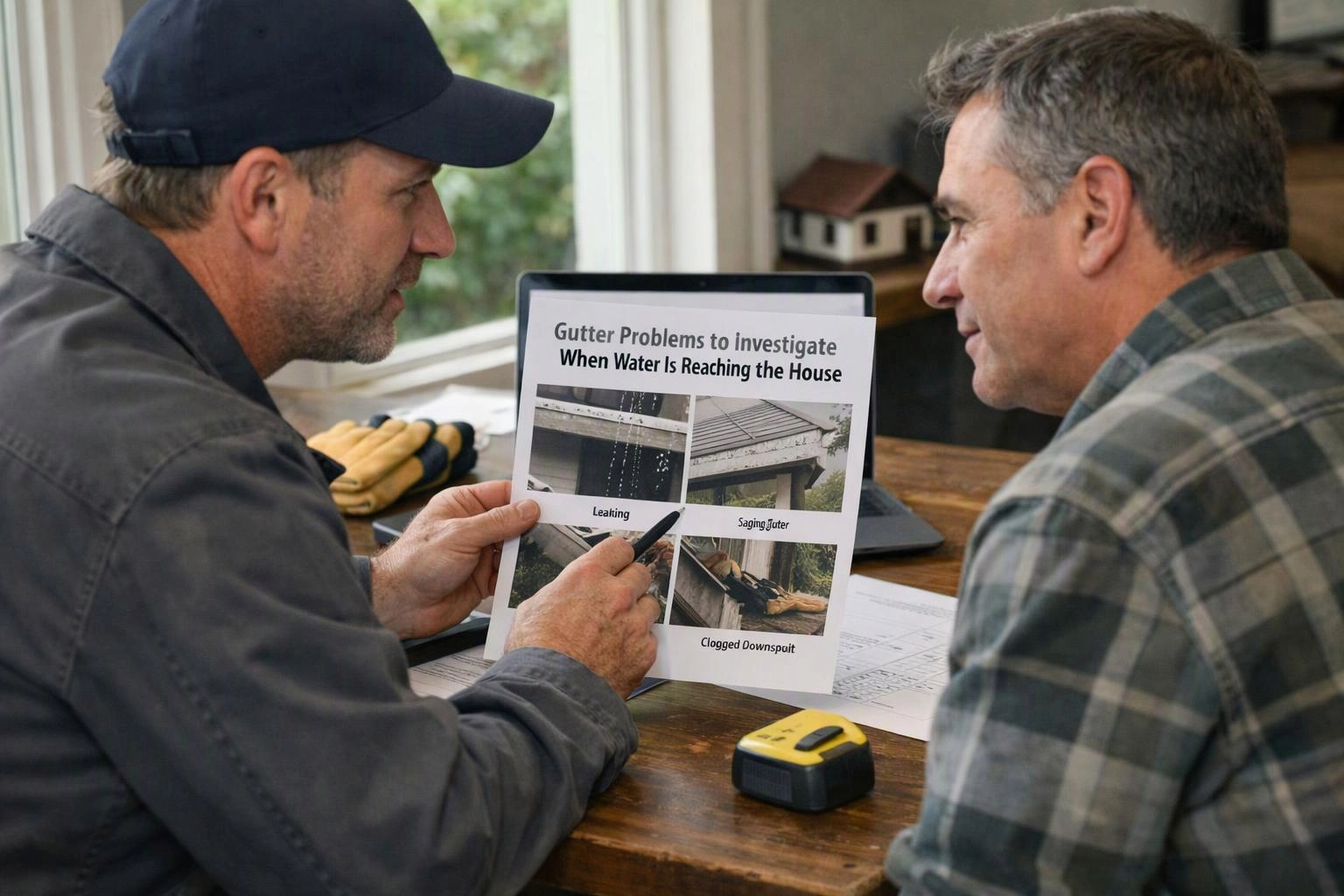
Gutter systems send water toward the house when runoff escapes before it reaches a clear downspout path.
Roof runoff should enter the gutter channel and travel toward a downspout. A damaged fascia board, poor gutter slope, or blocked outlet can interrupt that path.
Water may then run behind the gutter, across the exterior wall, or toward the foundation. We trace the water path from the roof edge to the ground before recommending work.
For new drainage planning, our Gutter Installation service can address gutter alignment, outlets, and discharge points together.
Gutter Warning Signs to Compare Before Choosing a Fix
Visible gutter warning signs point to different causes, so the repair depends on where water escapes and what supports the gutter.
Use the table as a starting point. Our team confirms the source by checking the gutter, fascia, roof edge, and drainage path.
| Warning sign | Likely cause | Possible fix |
|---|---|---|
| Gutter leak | Open seam, failed sealant, crack, or hole | Seal, patch, or replace the damaged section |
| Sagging gutter | Poor slope, loose hanger, or standing water | Reset the run and restore support |
| Loose gutter | Loose fastener, damaged fascia, or rot | Repair the support and secure the gutter |
| Overflow | Debris, poor slope, limited capacity, or outlet trouble | Clear, realign, add drainage capacity, or replace |
| Downspout blockage | Clogged outlet, elbow, or buried drainage path | Clear the blockage and correct discharge |
| Water stain | Overflow, leak, roof-edge issue, or wall moisture | Trace the source and repair the water path |
| Fascia damage | Long-term leaks, rot, or gutter pull-away | Repair the board and rebuild gutter support |
Leaking Gutter Joints
A leaking gutter joint lets water escape at a seam before it reaches the downspout.
Movement, failed sealant, and poor alignment can open a gutter joint. A water trail below the seam often shows where the leak begins.
We inspect the seam, nearby hangers, and the fascia behind it. Repair may work when the channel remains sound, while widespread seam damage can call for replacement.
Sagging Gutter Runs
A sagging gutter holds standing water because the gutter slope no longer leads runoff to the outlet.
Loose hangers, failed fasteners, and added water weight can pull a run down. The gutter may also sit incorrectly against the roof edge.
We check the run, hanger spacing, fastener support, and fascia condition. The fix may involve resetting the slope, replacing support, or replacing a distorted section.
Gutters Pulling Away From the Fascia
Gutters pulling away from the fascia lose the support needed to carry roof runoff.
A loose gutter hanger may pull free when fasteners lose their grip. Rot behind the fascia can also leave the gutter without solid structural support.
We inspect the fascia board before securing the gutter. A sound board may need new hangers, while rot requires support repair before gutter work continues.
Overflowing Gutters During Rain
Gutter overflow occurs when roof runoff cannot move through the channel and downspout fast enough.
Debris can block flow, but overflow can also result from limited gutter capacity, poor slope, or weak downspout placement. Water may spill over the front or behind the gutter.
We check the full runoff path during the assessment. The fix may include clearing the channel, improving the outlet, adjusting the slope, or planning gutter replacement.
Blocked or Poorly Routed Downspouts
A blocked downspout keeps water in the gutter and can force overflow at the roof edge.
Clogs may form at the downspout outlet, elbow, or connection to the drainage path. A downspout can also discharge too close to the foundation when its route is poor.
We check the outlet, elbows, splash block, and ground discharge. Our repair work focuses on moving water away from the foundation without creating a new drainage problem.
Drips From the Gutter Bottom
Drips from the gutter bottom usually come from a gutter hole, corrosion, or a crack.
Damage can develop where water sits or where the gutter material has weakened. A small drip can still leave moisture near the fascia or foundation.
We assess the damaged area and surrounding channel. Patch repair may suit isolated damage, while repeated holes or broad corrosion point toward replacement.
Water Stains on Walls or Near Windows
Water stains on walls or near windows can result from gutter overflow, roof-edge leaks, or water traveling behind the gutter.
An exterior wall stain near window trim shows that moisture is reaching the wall surface or opening. The stain may remain after the gutter problem stops, so we trace the active source first.
We inspect the roof edge, gutter line, fascia, and nearby window area. Related moisture damage may require gutter repair and roof repair as separate parts of the work.
Gutter Damage After Roof Work
Gutter damage after roof work can occur when the drip edge, gutter alignment, or fascia no longer directs runoff correctly.
Roof repair may shift the roof edge or leave a gap above the gutter. Misalignment can send roof runoff behind the channel instead of into it.
We check the drip edge, gutter position, fascia, and roof transition together. The fix may involve correcting alignment, completing roof-edge work, or replacing damaged gutter sections.
Gutters That Are Too Small for the Roof Runoff
Gutters that are too small for the roof area can overflow even when the channels are clean and supported.
Rainfall flow depends on the roof area, roof shape, gutter size, and downspout placement. One section may receive more runoff than the rest of the system.
We review the roof runoff pattern and outlet layout before recommending gutter replacement. A larger or better-routed system may provide a more lasting solution.
What to Check When Gutters Drip or Pull Away
Check the leak point, gutter support, roof edge, and downspout path before deciding whether the problem needs repair or replacement.
Our team follows the water path instead of treating every drip as the same problem.
When Overflowing Gutters Can Cause Wall Water Stains
Yes, overflowing gutters can cause wall water stains when runoff travels behind the gutter or down the exterior surface.
Water can reach the fascia, exterior wall, and window opening when the channel spills during rain. Continued overflow may also move toward the foundation.
We trace the stain back to the roof edge and gutter line. The repair scope depends on whether the source is gutter overflow, fascia damage, or roof-edge failure.
How We Decide Between Gutter Repair and Replacement
We choose gutter repair when the gutter remains sound, and we consider replacement when damage affects the gutter system or its support.
Our team reviews the gutter material, seam condition, fascia condition, slope, and downspout layout. Isolated damage may suit a focused repair when the surrounding parts remain reliable.
Replacement becomes more suitable when leaks, corrosion, separation, or poor capacity affect several parts. We explain the repair scope, replacement scope, and water-control goal in our quote.
Gutter and Roof Conditions We Check Together
We check the gutter and roof edge together when runoff may be escaping from either system.
Gutter installation depends on the roof edge, drip edge, fascia board, and flashing. A roof repair can also change how runoff enters the gutter.
Our inspection follows water from the roof surface through the gutter channel and downspout. This approach helps separate a gutter failure from a roof-edge failure.
When to Call HomeRemodelSammamish.com
Call HomeRemodelSammamish.com when the gutter is unsafe to reach, the fascia is damaged, or water is entering the house.
Ladder work can become risky near roof edges, unstable gutters, and wet surfaces. Our crew can inspect the system and determine whether it needs gutter repair, gutter replacement, or roof repair.
Contact our team so we can review the water path and recommend the right scope.
What a Gutter Inspection and Quote Covers
Our inspection identifies the failed gutter components, related roof-edge conditions, and work needed to control the water path.
We check the gutter channel, seams, hangers, fascia, downspouts, roof edge, and discharge area. We also look for signs that water has reached the exterior wall or foundation.
Our quote explains the repair scope or replacement scope, including related gutter installation or roof repair when those conditions affect drainage. Cost depends on the damaged parts, access, material, support condition, and downspout layout, so we provide an exact quote after reviewing the job.
Questions About Gutter Leaks and Water Damage
Can a leaking gutter cause damage behind the fascia?
Yes, a leaking gutter can cause damage behind the fascia when water runs through a joint or along the gutter back. We check the fascia and support before securing or replacing the gutter.
Should sagging gutters be repaired or replaced?
Sagging gutters should be repaired when the channel remains sound and the support can be restored. Replacement becomes more suitable when the gutter is damaged, distorted, or affected by broader support failure.
Why does water drip from the middle of a gutter?
Water dripping from the middle of a gutter usually points to a hole, crack, corrosion, or an open seam. We inspect the gutter bottom and nearby joints to choose between patch repair and replacement.
What does it mean when a downspout overflows at the bottom?
A downspout that overflows at the bottom may have a blocked outlet, a restricted elbow, or a drainage path that cannot accept the water. We check the full route and the discharge point near the foundation.
Can roof damage make gutters overflow?
Yes, roof damage can make gutters overflow when the drip edge or roof alignment sends runoff behind the gutter. We inspect the roof edge and gutter together to identify the source.