Basement Moisture Signs to Address Before Remodeling or Finishing
Basement moisture signs include musty smells, white powder, peeling paint, stains, damp floors, and mold growth. At HomeRemodelSammamish.com, we check the moisture source and affected materials before remodeling, drywall installation, repair, or flooring work.
Request an EstimateWhy Basement Moisture Must Be Checked Before Finishing
Basement moisture can damage a finished basement when new materials hide the source of water intrusion. Drywall, flooring, insulation, and wall framing can all suffer when damp conditions remain behind the finish.
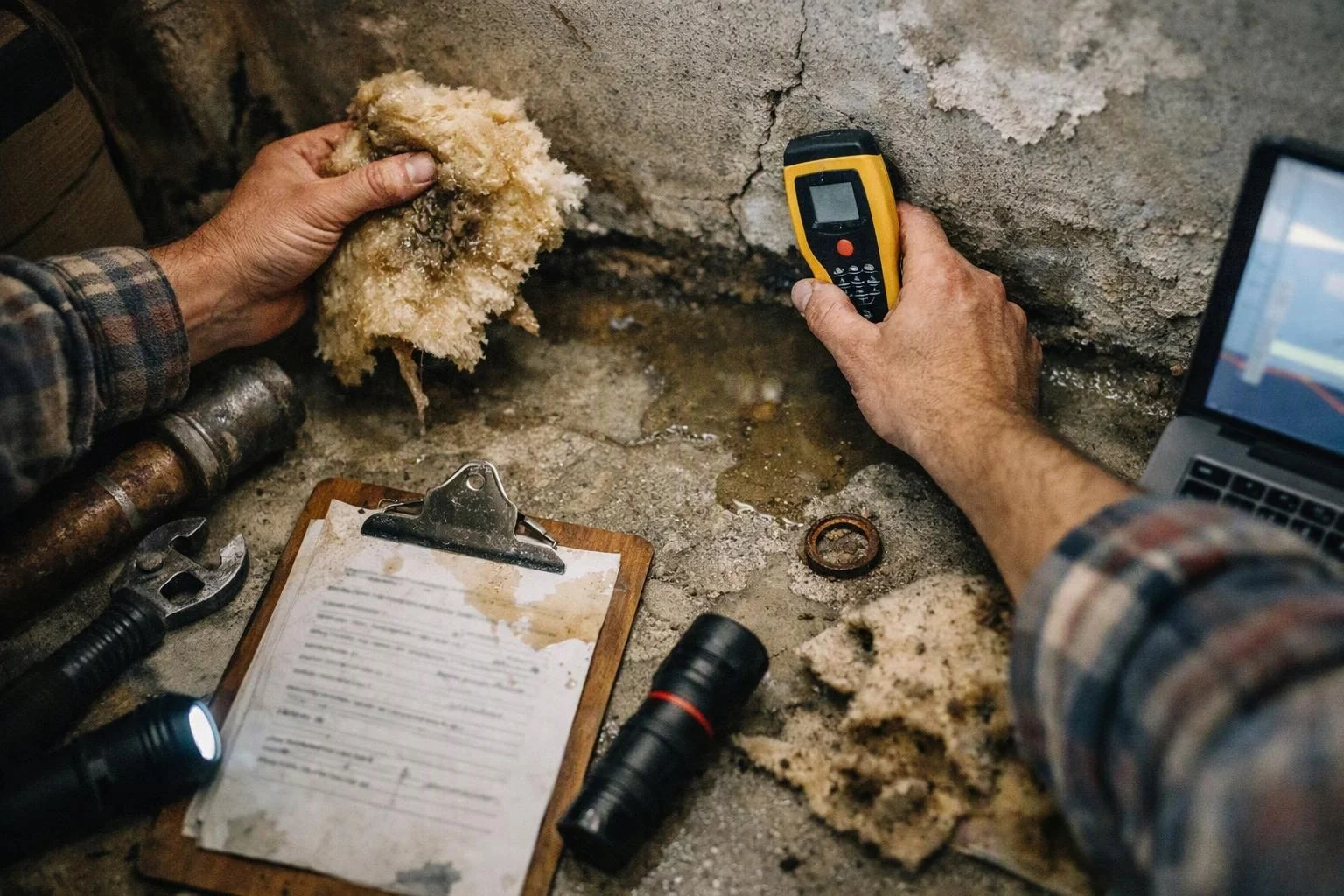
We inspect the basement before planning remodeling work. Our team looks for signs that water enters through foundation walls, moves through masonry, rises from the floor slab, or forms through condensation.
Moisture findings can change the remodeling scope. A proper Basement Remodeling plan addresses the building condition before we install new surfaces.
Basement Moisture Signs That Need Attention
Visible and hidden signs can point to different moisture sources. The table connects each sign with its likely cause, remodeling risk, and practical response.
| Sign | Possible cause | Remodeling risk | What we evaluate |
|---|---|---|---|
| Musty odor | Hidden moisture or mold | Poor air quality and concealed material damage | Moisture source and affected areas |
| White powder | Efflorescence from water movement | Recurring dampness behind finishes | Masonry and foundation conditions |
| Peeling or bubbling paint | Wall moisture or poor surface preparation | Paint failure and damaged wall surfaces | Surface condition and moisture movement |
| Water stains | Plumbing leaks, drainage, or roof runoff | Active leaks hidden by new finishes | Ceilings, walls, plumbing, and drainage paths |
| Damp concrete | Groundwater or water vapor | Flooring failure and damaged subfloor | Slab moisture and floor assembly |
| Mold | Persistent moisture | Indoor air quality concerns and material damage | Extent of growth and damaged materials |
| Condensation | Warm, moist air meeting cool surfaces | Repeated surface moisture | Ventilation, air movement, and cold surfaces |
Mistake: Covering a Musty Basement Smell
A musty odor often means hidden moisture or mold needs evaluation. Fragrance products may cover the smell, but they don't correct the moisture source.
Leaving the odor in place can raise indoor air quality concerns and increase material damage. We trace damp areas and include needed correction in the project scope.
Mistake: Painting Over Peeling or Bubbling Paint
Peeling paint and bubbling paint often show that wall moisture is pushing against the coating. New paint can fail when the surface remains damp or poorly prepared.
We check the wall condition, remove failing material when needed, and plan proper surface preparation. The project cost depends on the affected area, layers of failed paint, and the moisture correction required.
Mistake: Ignoring White Powder on Basement Walls
Efflorescence is a white powder that forms when water moves through a concrete wall or other masonry. The deposit shows water movement, even when the wall doesn't look wet.
Covering the powder can hide a continuing moisture problem. We review the masonry, foundation wall, and drainage conditions before choosing a repair or finish.
Mistake: Installing Drywall Against a Damp Wall
Drywall installed against a damp wall can absorb moisture and support mold growth. Wall framing and insulation can also suffer when air cannot dry the assembly.
We check the wall before drywall installation and select an assembly suited to the condition. The cost depends on wall preparation, framing changes, moisture control, and the amount of drywall repair needed.
Mistake: Laying Flooring Over a Damp Basement Slab
Basement flooring installed over a damp concrete slab can fail when floor moisture or water vapor remains below it. A subfloor can also trap moisture against the slab.
We evaluate the slab and planned floor assembly before flooring installation. Material selection and the cost of correction depend on slab conditions, subfloor needs, and the moisture control plan.
Mistake: Treating Water Stains as Old and Harmless
Water stains on a ceiling or wall can mark an active leak, even when the surface feels dry. Plumbing leaks, drainage problems, and water entry can all leave similar marks.
We inspect nearby plumbing and drainage paths before covering the stain. The project scope depends on whether the source remains active and whether hidden material damage is present.
Mistake: Sealing a Basement Before Finding the Moisture Source
Water intrusion should be traced before a foundation wall or floor receives a sealing treatment. Foundation cracks, groundwater, drainage, and condensation can require different responses.
Sealing without diagnosis can trap moisture or leave the source active. We identify the likely path first, then match the repair and finish plan to the condition.
Mistake: Remodeling Around Mold or Soft Building Materials
Mold, soft drywall, rotted wood, and damaged insulation should be addressed before new finishes cover them. These materials can signal hidden water damage and ongoing moisture.
We plan material removal based on the affected area and the source of dampness. The cost depends on removal, disposal, replacement materials, and repairs needed for indoor air quality and moisture control.
What We Check Before Basement Remodeling Begins
Our moisture inspection connects visible signs with the planned remodeling scope. We check the areas that could damage drywall, flooring, framing, or insulation after finishing.
Our team also considers whether plumbing or drainage work needs licensed trade support. Code and inspection requirements can affect the final plan when work changes concealed systems or structural components.
When to Call HomeRemodelSammamish.com About Basement Moisture
Call us before remodeling when moisture could affect the safety, durability, or air quality of the finished space. Our team can review the condition and explain what belongs in the remodeling plan.
Use our contact page to request a project review. We can explain how the findings affect drywall repair, drywall installation, flooring, and the larger scope.
Get a Free EstimateHow Moisture Findings Change the Remodeling Plan
Moisture findings can change the order of work, material selection, and project scope. Basement remodeling should begin with moisture control so new finishes have a sound surface.
Some conditions call for drywall repair before drywall installation. Other findings may change the flooring assembly, wall framing, insulation plan, or finish materials.
We include the needed correction in our estimate instead of treating visible damage as a surface-only issue. Exact project pricing depends on the source, affected materials, access, and selected finishes.
Plan a Basement Finish That Can Stay Dry
A basement finish should follow a moisture assessment, not hide signs of dampness. We review the source, repair needs, drywall condition, and flooring plan before work begins.
Our team can coordinate drywall repair, drywall installation, and basement flooring around the moisture control plan. Request a consultation for an exact scope and quote based on your basement's condition.
Related Resources
Basement Remodel Cost Factors and Contractor Quote Preparation
Why It MattersBasement, Garage, or Attic Conversion: Making Better Use of Existing Space
Why It MattersPermits and Inspections for Remodeling Projects in Washington
Why It MattersHow 3D Visualization Can Help Plan a Remodeling Project